

 Origin
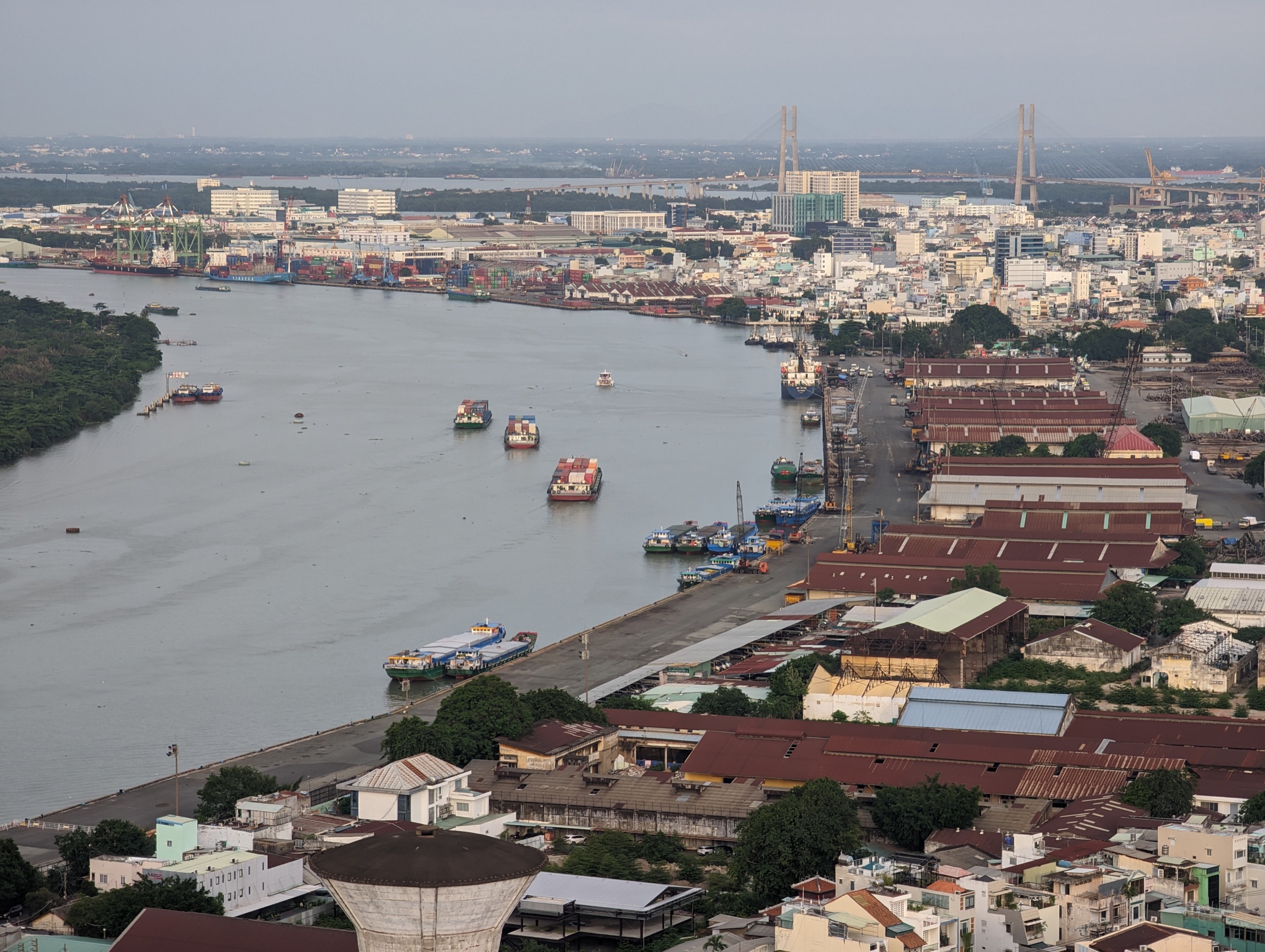
Shipping from Vietnam
Our own teams in Ho Chi Minh City and Hanoi, for the fastest-growing origin for US importers.
Origins / China
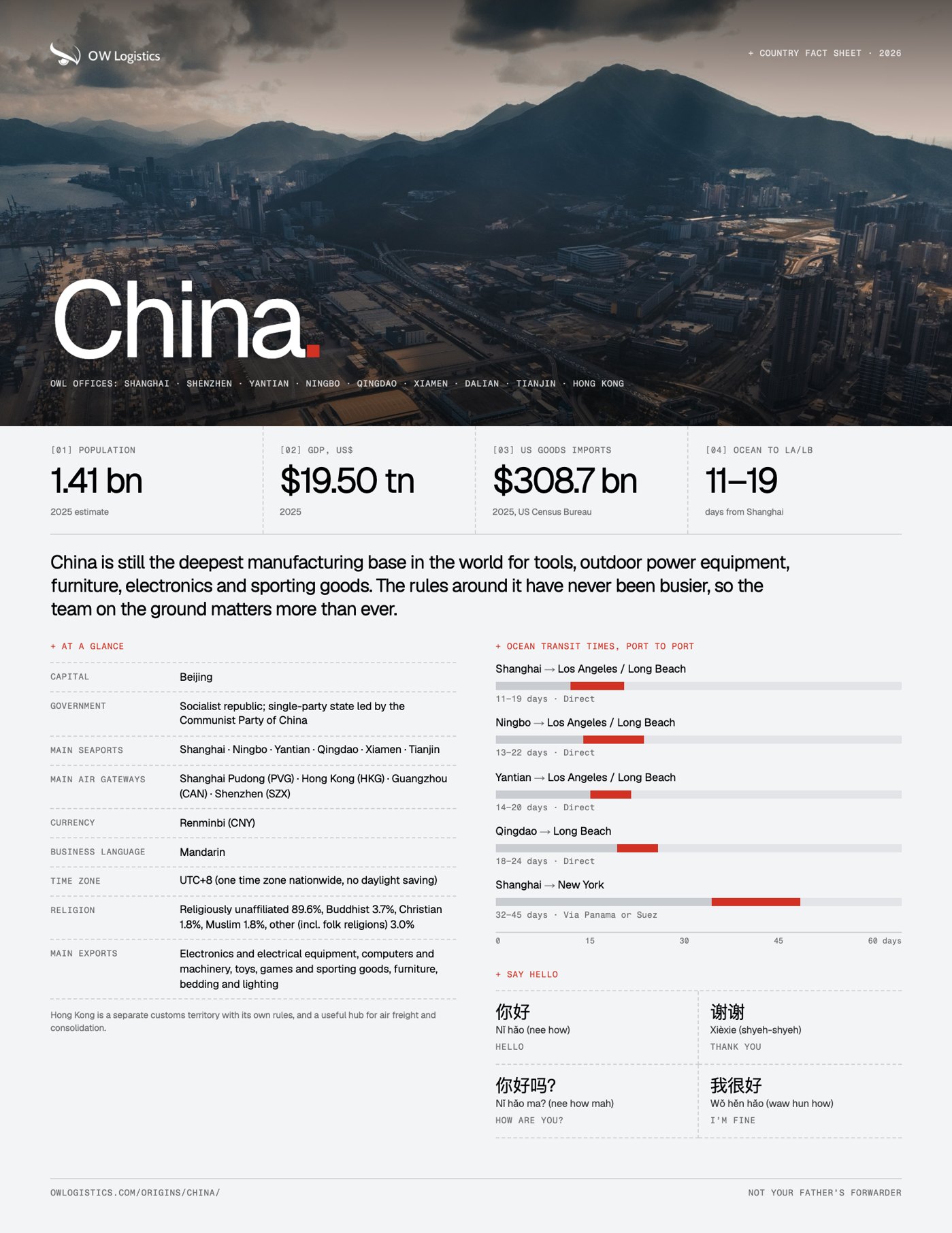
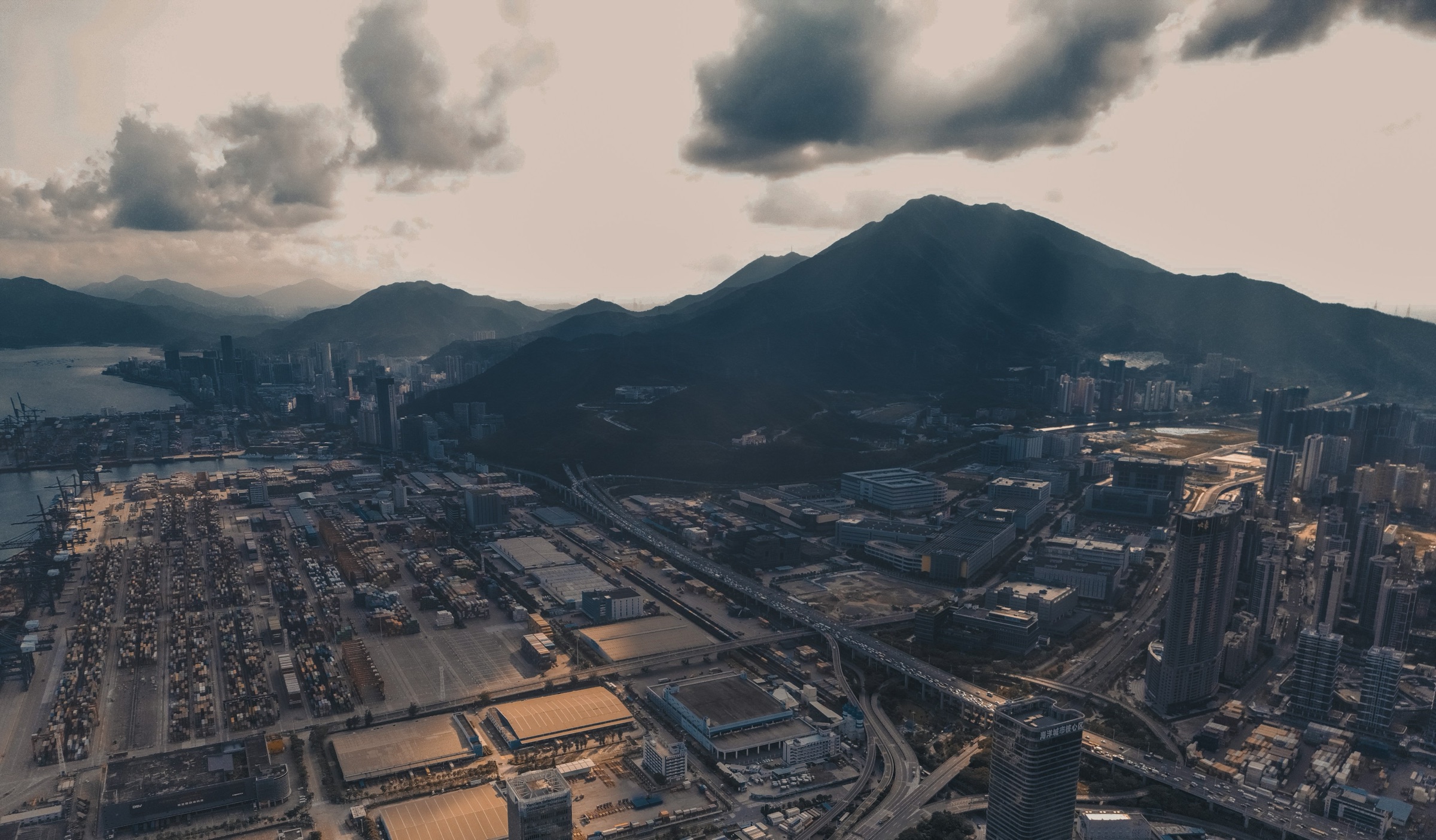
Shipping from China, run by nine offices of our own: Tianjin in the north to Shenzhen and Hong Kong in the south.
China
Our own people sit in Shanghai, Shenzhen, Yantian, Ningbo, Qingdao, Xiamen, Dalian, Tianjin and Hong Kong, close to the factories and the ports they ship from. They manage orders, suppliers, bookings and consolidation at the source, so problems get solved in the time zone they start in.
Many of our customers buy from China and its neighbors at once. With our own teams in Vietnam, Thailand, Cambodia, Laos and Sri Lanka too, you can run China and “China plus one” sourcing through one partner, with every PO on one live picture in OWL Vision from PO issuance to final delivery.
At a glance
Hong Kong is a separate customs territory with its own rules, and a useful hub for air freight and consolidation.
Transit times
Indicative port-to-port days on the water. Expedited services from Shanghai can reach Long Beach in about 10 to 11 days, and many importers rail East Coast cargo inland from the West Coast instead of sailing all the way.
Shanghai Los Angeles / Long Beach Direct
11–19 days
Ningbo Los Angeles / Long Beach Direct
13–22 days
Yantian Los Angeles / Long Beach Direct
14–20 days
Qingdao Long Beach Direct
18–24 days
Shanghai New York Via Panama or Suez
32–45 days
Indicative port-to-port ranges from published carrier schedules. They shift with the season, the carrier and congestion, so ask us for current sailings on your lane.
What it makes
Whatever you make, there is a cluster for it. Sales offices and factories are often in different cities, so we confirm the real factory address before the first PO.
Power tools, hand tools, hardware and cookware from Yongkang, Ningbo and Cixi, shipped through Ningbo.
Mowers, engines and outdoor power tools from the Suzhou and Changzhou region, shipped through Shanghai.
Furniture from Foshan, Dongguan and Anji, and lighting from Zhongshan.
Components and finished electronics from Shenzhen, Dongguan, Suzhou and Kunshan.
Footwear, sportswear and sporting goods from Xiamen, Quanzhou, Jinjiang and Putian.
Motorcycles, powersports vehicles and parts from Chongqing, plus auto and motorcycle parts from Taizhou and Ningbo.
Know before you ship
China carries more US trade measures than any other origin, and they change often. Check the current rules for your HTS code before you commit.
China-origin goods carry Section 301 tariffs on top of regular duty, and product exclusions come and go. Check the current rate for your HTS code before you place the order, not after it sails.
US Customs presumes that goods made wholly or partly in Xinjiang, or by companies on the UFLPA Entity List, involve forced labor, and can detain them. You need traceability back to raw materials such as cotton, aluminum and polysilicon.
China has more AD/CVD orders than any other country, from wooden cabinets and small engines to tool chests and steel shelving. Check the scope before you buy a new product.
Goods made in Hong Kong must be marked “China”, though they still count as Hong Kong origin for duty. Goods simply shipped through Hong Kong stay mainland China origin.

Our team in China
Our China teams follow up with suppliers, check cargo readiness, book space and consolidate close to the factory. They work in Mandarin and Cantonese, so small issues get fixed on a phone call, not a week later. Every update lands in OWL Vision for your team to see.
Plan around the holidays
Chinese New Year closes most factories for two to four weeks between late January and February, and National Day’s Golden Week stops them again in early October. Our factory closure calendar has the dates for the next ten years, with book-by dates.
Shanghai, Ningbo and Yantian to Los Angeles or Long Beach typically take about two to three weeks port to port, and expedited services can do it in about 10 to 11 days. East Coast ports such as New York usually take about four and a half to six and a half weeks all-water, so many importers rail cargo inland from the West Coast instead.
Usually the one nearest your factory. Shanghai and Ningbo serve the Yangtze River Delta, Yantian, Shekou and Nansha serve Guangdong, Qingdao, Tianjin and Dalian serve the north, and Xiamen serves Fujian. All the major ports have direct US sailings.
Yes. China-origin goods carry Section 301 tariffs on top of regular duty, and other US measures can apply too. The rules and exclusions change often, so check the current rate for your HTS code with your broker before you buy.
The Uyghur Forced Labor Prevention Act presumes that goods made wholly or partly in Xinjiang, or by companies on the UFLPA Entity List, are made with forced labor, and US Customs can detain them. Importers need traceability back through raw materials such as cotton, aluminum and polysilicon.
Only if the product is substantially transformed in the new country. Simple assembly or repacking of Chinese parts usually leaves the goods Chinese origin, and US Customs actively investigates this kind of transshipment. Plan the move with origin rules in mind, and keep the production records to prove it.
More origins
OriginOur own teams in Ho Chi Minh City and Hanoi, for the fastest-growing origin for US importers.
 Origin
Laem Chabang, Bangkok and the manufacturing corridor of the Eastern Seaboard.
 Origin
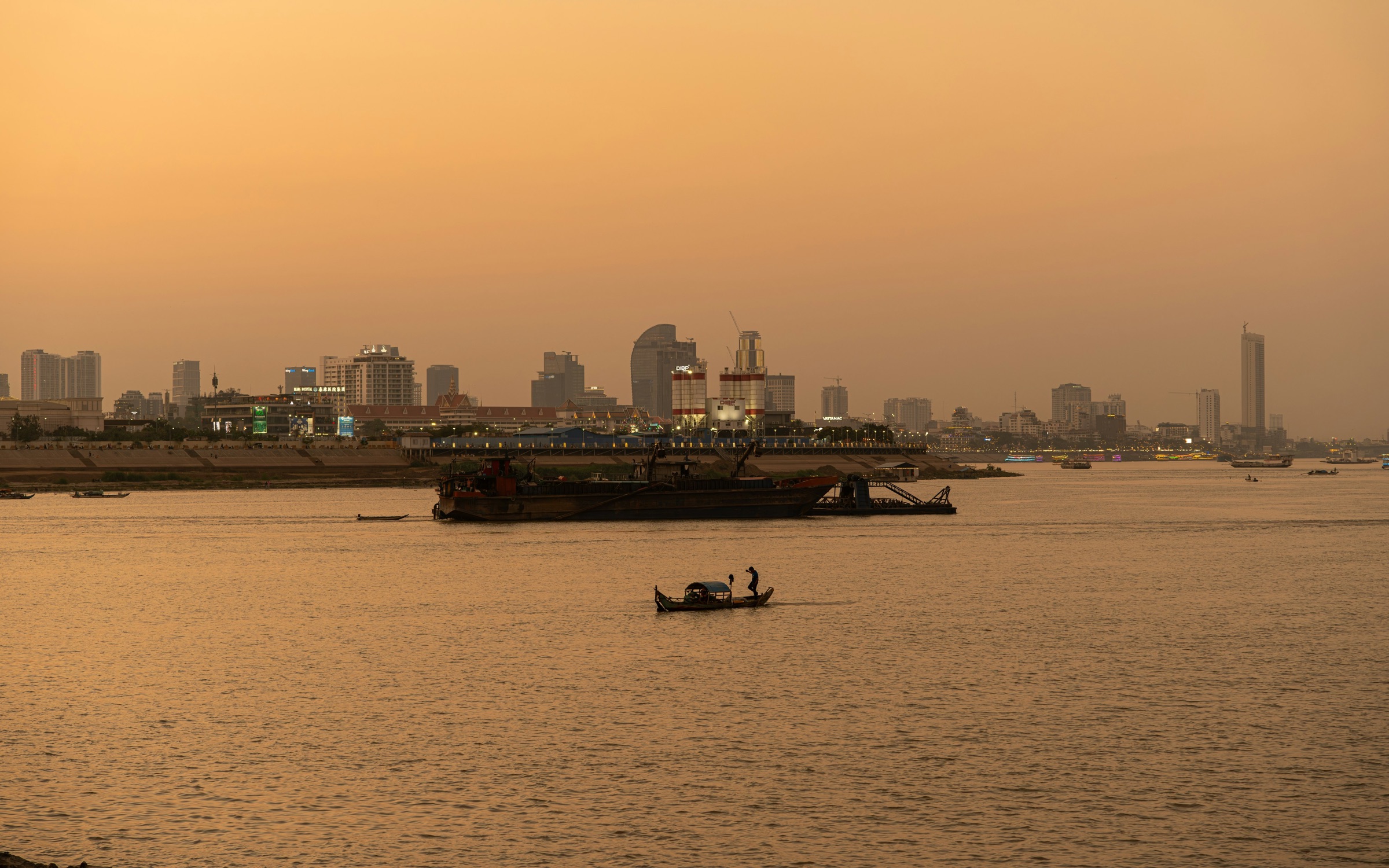
Apparel, footwear and travel goods, shipped through Sihanoukville and Phnom Penh.
 Origin
Landlocked, not locked out: rail, road and river routes to the sea from Vientiane.
 Origin
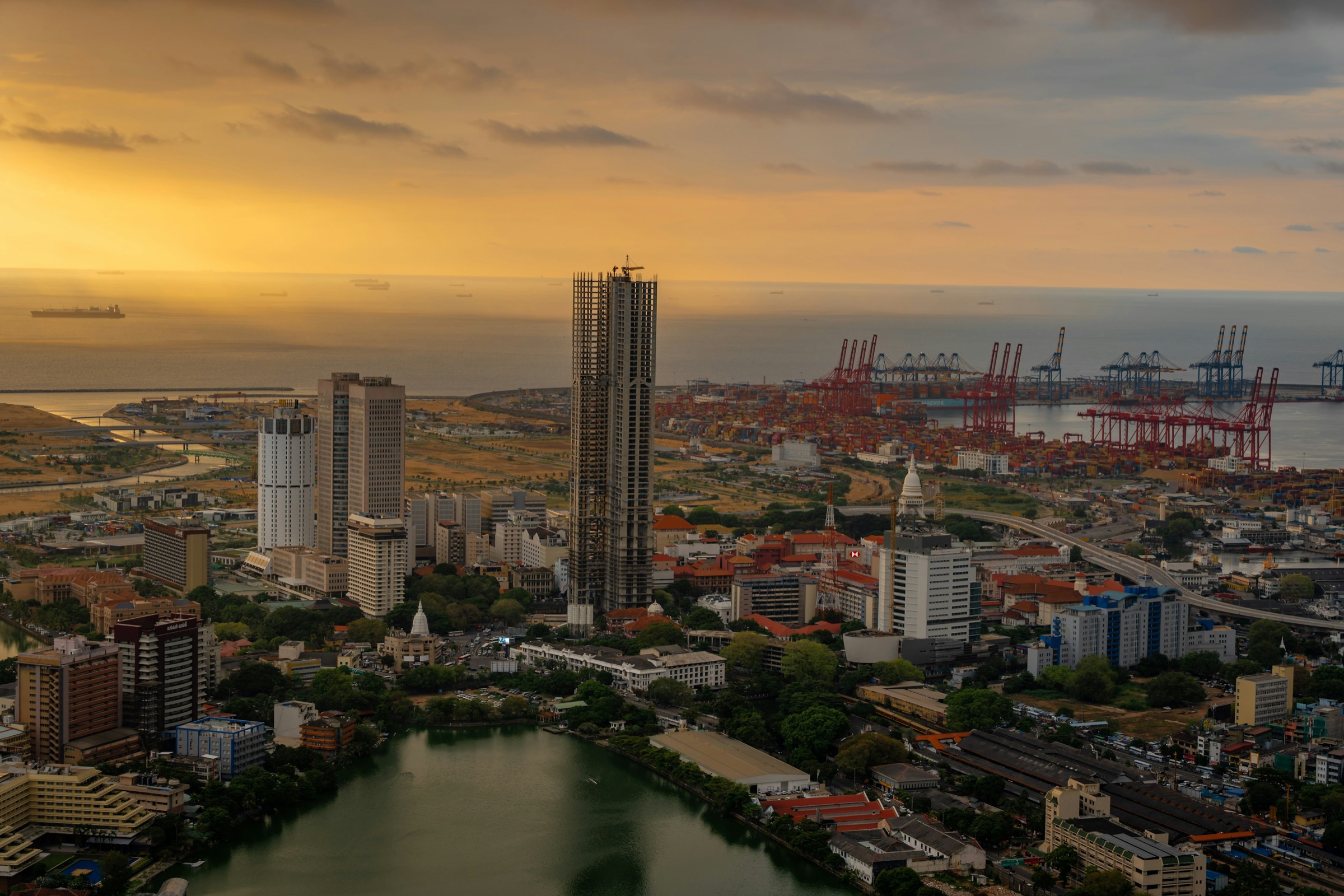
Apparel, rubber and tea, with Colombo as one of South Asia’s great transshipment hubs.
OWL Vision
From the purchase order in China to your door: every container, PO and SKU on one live picture, with alerts before a delay reaches you.
We detected a Global Privacy Control signal from your browser and have opted you out of the sale or sharing of your personal information.