

 Origin
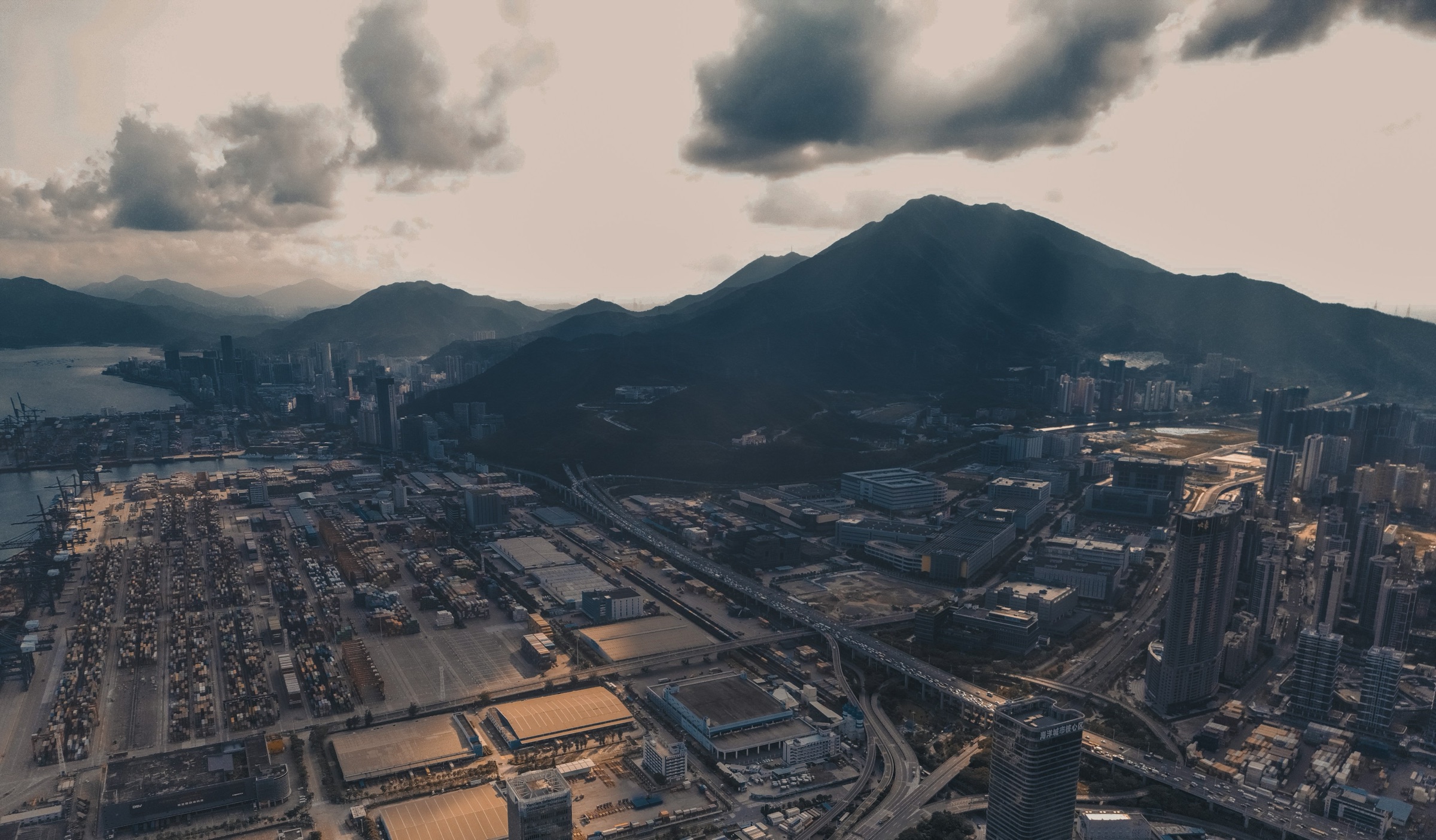
Shipping from China
Nine offices across every major port and manufacturing cluster, from Tianjin to Shenzhen.
Origins / Vietnam
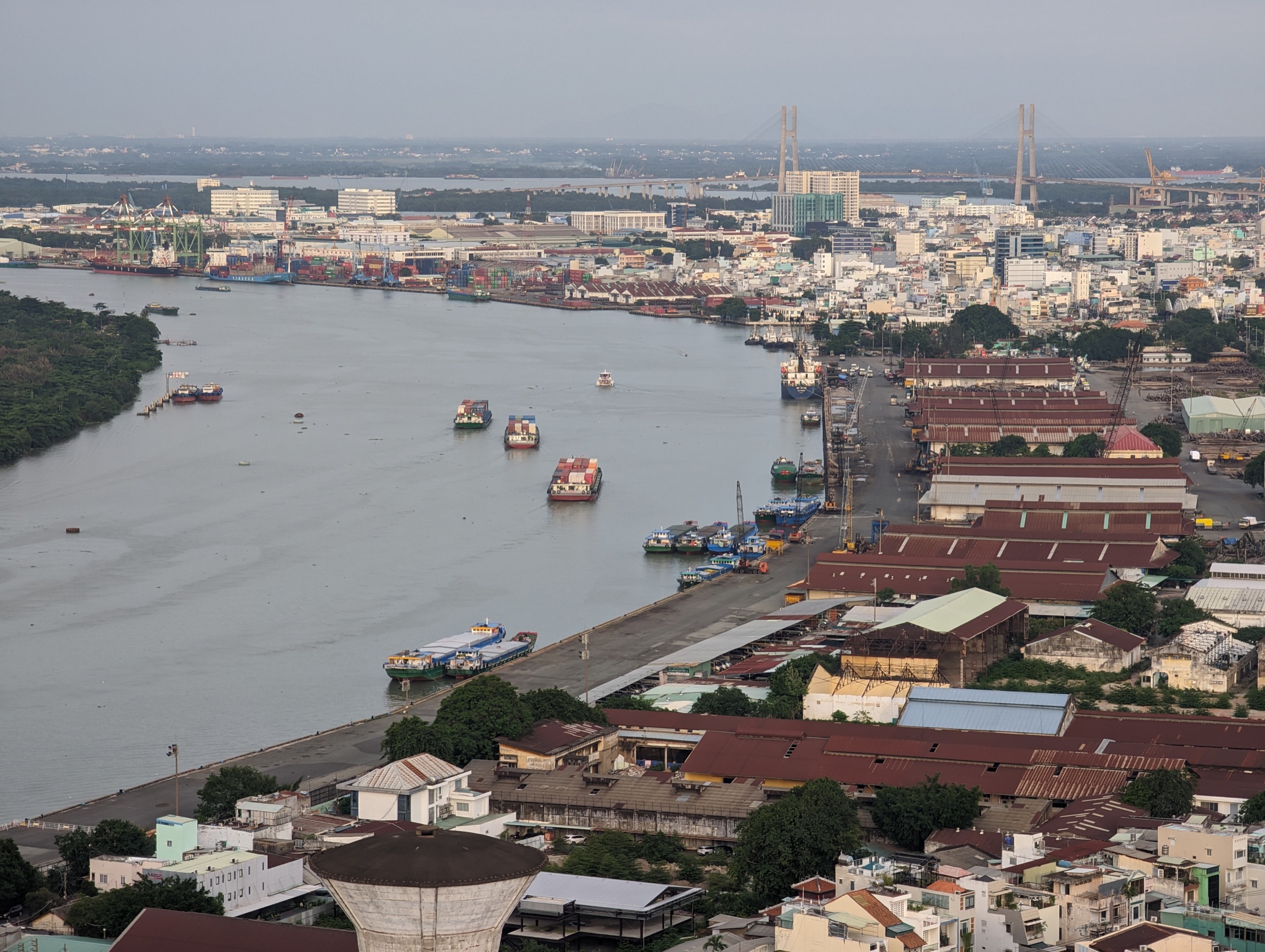
Shipping from Vietnam with our own teams in Ho Chi Minh City and Hanoi, north and south covered.
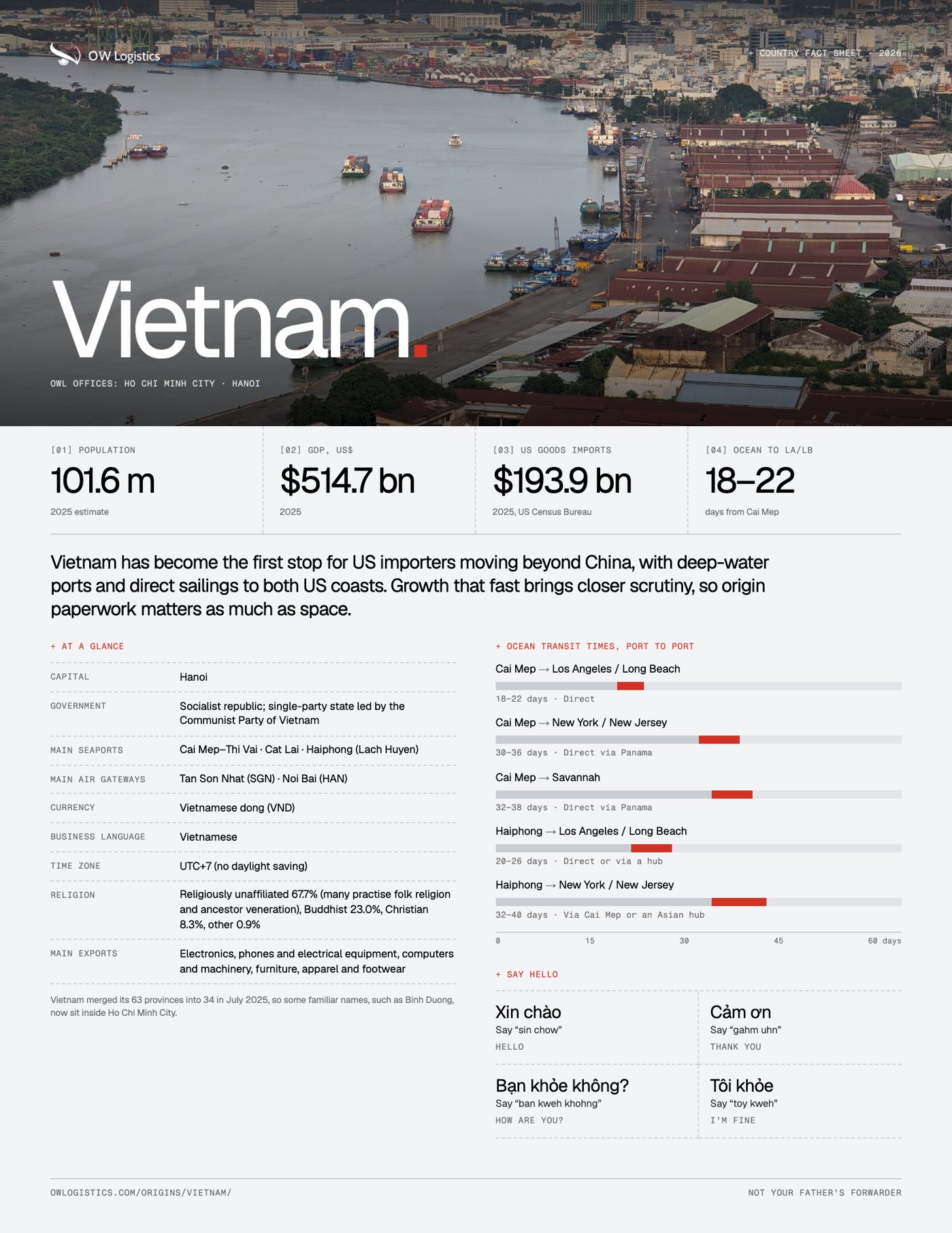
Vietnam
Our teams in Ho Chi Minh City and Hanoi cover the furniture and footwear factories of the south and the electronics and metal goods plants of the north. They manage orders, suppliers, bookings and consolidation at the source, in Vietnamese and English.
Where speed matters, we book southern cargo on services that load at Cai Mep rather than feeder ports, and use direct Lach Huyen sailings in the north where they fit. Every PO, container and SKU shows in OWL Vision from PO issuance to final delivery.
At a glance
Vietnam merged its 63 provinces into 34 in July 2025, so some familiar names, such as Binh Duong, now sit inside Ho Chi Minh City.
Transit times
Indicative port-to-port days on the water. East Coast sailings go through the Panama Canal, and a missed feeder connection usually adds about a week.
Cai Mep Los Angeles / Long Beach Direct
18–22 days
Cai Mep New York / New Jersey Direct via Panama
30–36 days
Cai Mep Savannah Direct via Panama
32–38 days
Haiphong Los Angeles / Long Beach Direct or via a hub
20–26 days
Haiphong New York / New Jersey Via Cai Mep or an Asian hub
32–40 days
Indicative port-to-port ranges from published carrier schedules. They shift with the season, the carrier and congestion, so ask us for current sailings on your lane.
What it makes
Vietnam’s manufacturing splits between north and south, and our two offices follow it.
Wood and upholstered furniture from the core cluster around Ho Chi Minh City and Dong Nai, plus solid-wood and outdoor furniture from Quy Nhon.
Phones, circuit boards and components from Bac Ninh, Thai Nguyen and the Hanoi area.
Large-scale footwear factories across the south, shipping through Cai Mep.
Cut-and-sew in the south, and knitting, dyeing and finishing in the north around Hai Phong.
Toys, games and sports equipment, a fast-growing line for US buyers, made in both regions.
Kitchenware, metal parts and injection-molded plastics from the industrial provinces around Hanoi and Hai Phong.
Know before you ship
US trade measures on Vietnam have changed often. Check the current rules for your HTS code before you commit.
US Customs decides origin by where goods are substantially transformed, not where they ship from. Chinese parts lightly assembled or repacked in Vietnam can be treated as Chinese, so keep bills of materials and production records on file.
Since May 2025, only Vietnam’s Ministry of Industry and Trade issues certificates of origin. The US doesn’t require one at entry, but a non-preferential C/O (Form B) is useful origin evidence.
Vietnam cut its provinces from 63 to 34 in July 2025. Supplier addresses on invoices, certificates and ISF filings may have changed, so keep your master data consistent.
Anti-dumping and countervailing duties cover goods such as mattresses, tool chests, solar panels and paper plates. Goods finished in Vietnam can still be detained under the UFLPA if their inputs trace back to Xinjiang.

Our team in Vietnam
Our people in Ho Chi Minh City and Hanoi visit suppliers, chase production, book space and consolidate cargo before it sails. They plan around cut-offs and Tết, and flag problems in OWL Vision before they reach you.
Plan around the holidays
Tết shuts most factories for one to three weeks between late January and February, Reunification Day and Labor Day are often bridged into a long break at the start of May, and National Day closes them again in early September. Our factory closure calendar has the dates for the next ten years, with book-by dates.
Direct sailings from Cai Mep, near Ho Chi Minh City, to Los Angeles or Long Beach typically take about 18 to 22 days port to port. New York or Savannah take around 30 to 38 days via the Panama Canal. Add roughly one to two weeks for door to door, and more for LCL or transshipped cargo.
For southern factories, Cai Mep–Thi Vai is the deep-water port with direct US sailings. In the north, Haiphong’s Lach Huyen terminal has some direct US West Coast services, and other cargo relays via a hub. The right choice depends on where your factory is, the cut-offs and how fast you need the goods.
US Customs doesn’t require a Vietnamese certificate of origin at entry, because the US has no free trade agreement with Vietnam. Origin still matters for duties and enforcement, so many importers ask suppliers for a non-preferential C/O (Form B) and production records. Since May 2025, only Vietnam’s Ministry of Industry and Trade issues them.
US Customs decides country of origin by where goods are substantially transformed, not where they ship from. Goods only lightly processed or repacked in Vietnam can be treated as Chinese origin, and that can bring penalties. Keep bills of materials, production records and supplier declarations on file.
Tết falls between late January and mid-February, and many factories close for one to three weeks. There is a rush to ship before it and a slow restart after, so book space and finish production well ahead of the holiday.
More origins
OriginNine offices across every major port and manufacturing cluster, from Tianjin to Shenzhen.
 Origin
Laem Chabang, Bangkok and the manufacturing corridor of the Eastern Seaboard.
 Origin
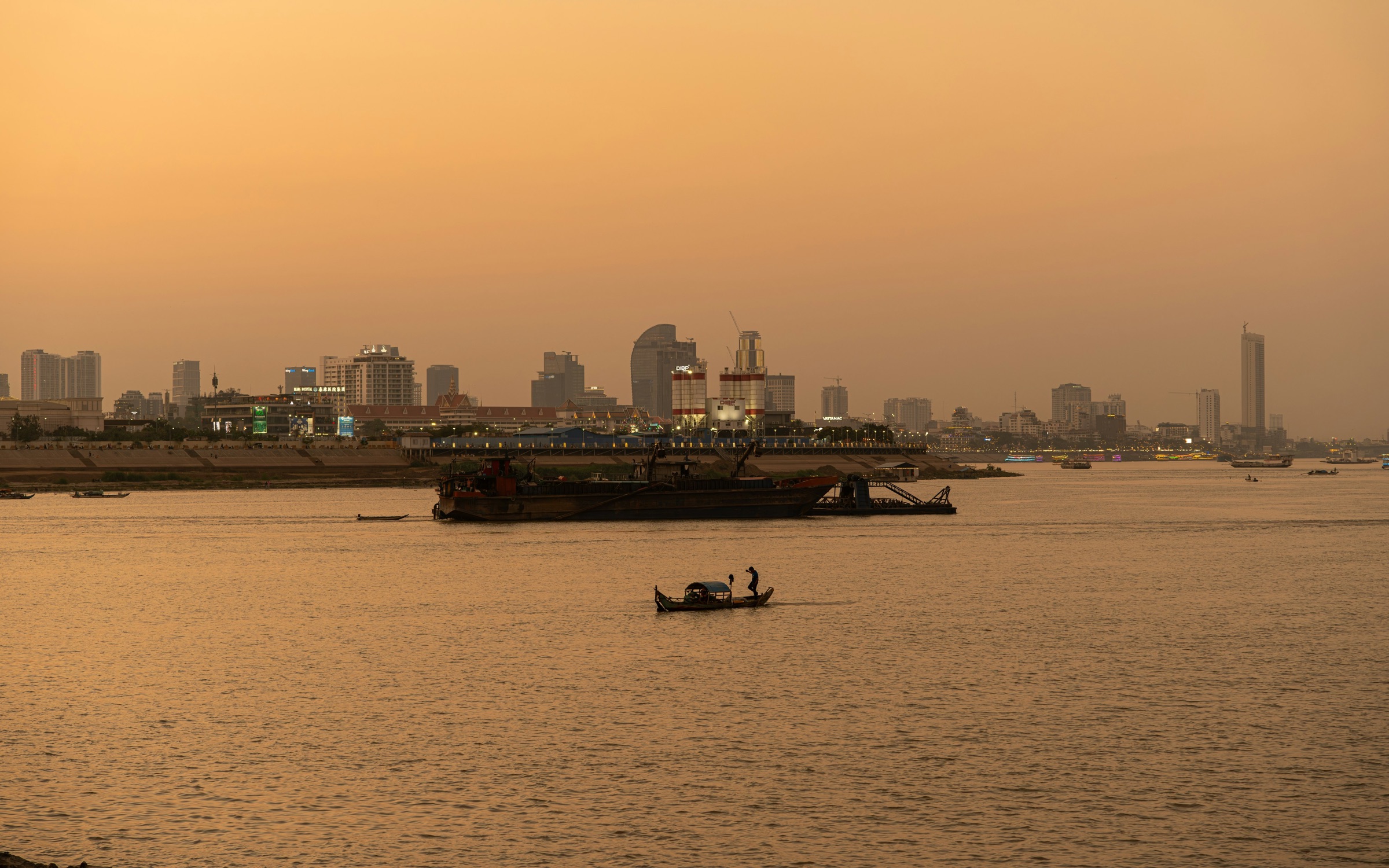
Apparel, footwear and travel goods, shipped through Sihanoukville and Phnom Penh.
 Origin
Landlocked, not locked out: rail, road and river routes to the sea from Vientiane.
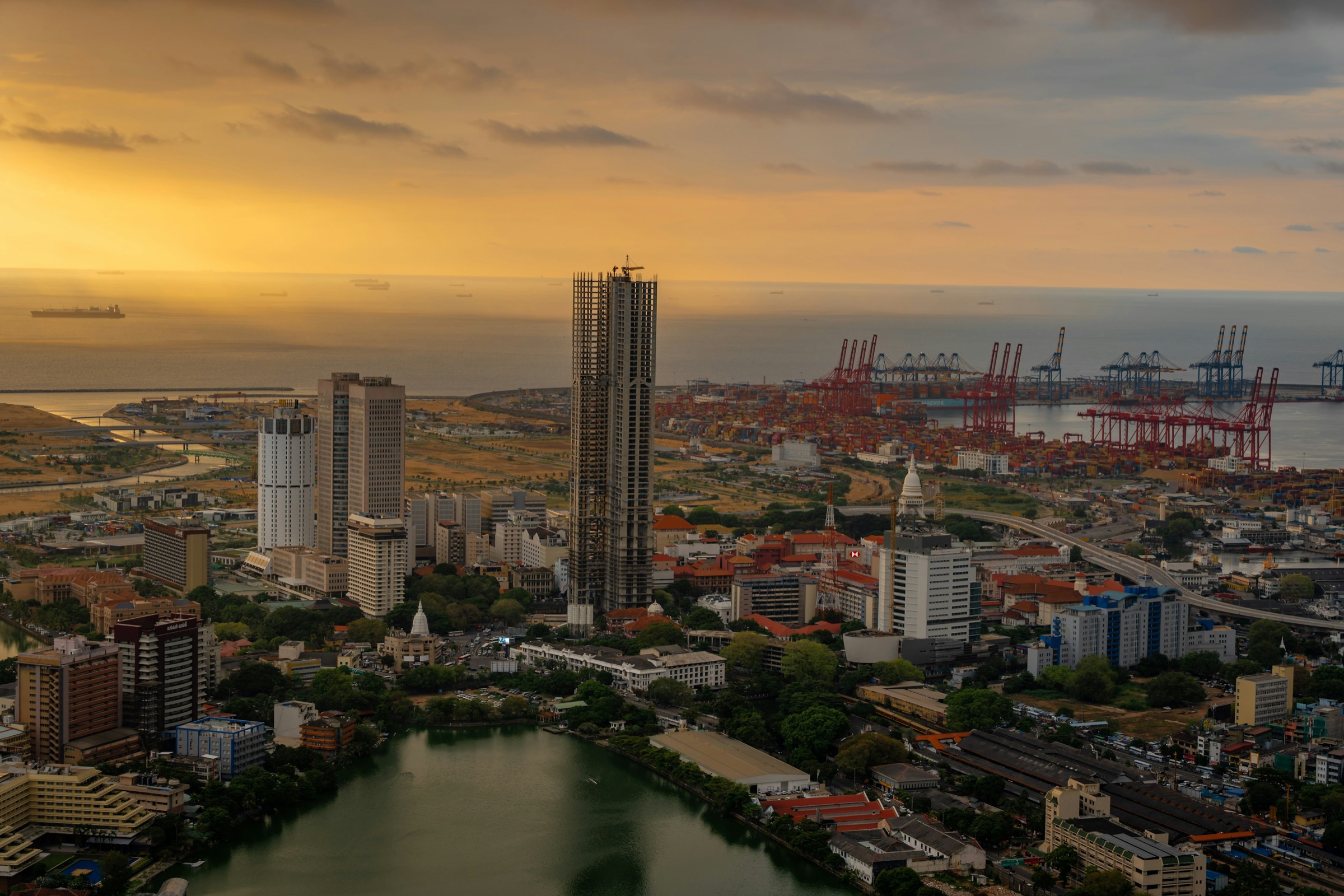 Origin
Apparel, rubber and tea, with Colombo as one of South Asia’s great transshipment hubs.
OWL Vision
From the purchase order in Vietnam to your door: every container, PO and SKU on one live picture, with alerts before a delay reaches you.
We detected a Global Privacy Control signal from your browser and have opted you out of the sale or sharing of your personal information.